
- A battery built to last
- Why it beats old lead-acid batteries
- Handles our crazy weather
- Perfect for cottages, RVs, and camping
- Emergency backup when the grid fails
- Saves you money in the long run
- Safe enough to put beside your bed
- Better for the environment
- A bare battery isn’t plug-and-play
- What a portable power station does for you
- Three ways to charge
Introduction
If you’ve ever lost power during a winter storm, dragged a heavy generator to a campsite, or watched a lead-acid battery die after just two years, you already know the frustration. Canadian homes, RVs, and cottages need reliable power – not noisy fumes or constant battery replacements. There’s a cleaner, quieter, and longer-lasting solution: the LiFePO4 battery. Short for Lithium Iron Phosphate, this battery technology lasts 5 to 10 times longer than lead-acid, works safely in extreme cold and heat, and requires zero maintenance. When paired with a portable power station, it gives you an all-in-one backup that can run your fridge, charge your devices, and keep your family comfortable during outages or off-grid adventures. In this simple guide, we’ll explain what LiFePO4 is, why it’s perfect for Canada, and how a portable power station can replace your old generator for good.

What Is a LiFePO4 Battery?
A battery built to last
LiFePO4 sounds technical, but it’s just a type of rechargeable battery. Unlike the lithium battery in your phone (which focuses on being thin and light), LiFePO4 is designed for safety and long life.
Think of it this way:
- Regular lithium battery = sports car (fast, but fragile)
- LiFePO4 battery = pickup truck (tough, reliable, works for years)
Why it beats old lead-acid batteries
You’ve probably used lead-acid batteries – the heavy ones in cars or older RVs. They’re cheap at first, but they die in 2–4 years.
LiFePO4 is completely different:
- Lasts 10–15 years – up to 6,000 charge cycles vs. 300–500 for lead-acid.
- Super safe – won’t catch fire or explode. You can use it indoors.
- No maintenance – no watering, no special charging. Just use it.
- Cheaper over time – yes, it costs more upfront, but you don’t keep buying new batteries every few years.
One purchase, a decade of peace of mind.
Why LiFePO4 Works So Well for Canada
Handles our crazy weather
Canada gives us -30°C winters and 35°C summers. Old batteries hate the cold.
- LiFePO4 keeps working down to -20°C, with 70–80% of its normal power.
- Models with self-heating can even charge below freezing.
- In summer heat, LiFePO4 is safe up to 60°C – no leaks, no damage.
So whether it’s a January ice storm or a July heatwave, your power stays on.
Perfect for cottages, RVs, and camping
- Remote cottage – No grid power? Pair a LiFePO4 battery with a couple of solar panels. You’ll get lights, a water pump, phone charging, and a small fridge.
- RV trips – No noise, no fumes. Charge while driving or from solar. Run your fridge, laptop, and fan without annoying the neighbours.
- Weekend camping – A portable power station keeps your cooler cold, charges your drone, and runs movie night.
Emergency backup when the grid fails
Blackouts happen – ice storms, wildfires, summer thunderstorms. A LiFePO4 portable power station sits quietly in your living room. When the power goes out, it switches on in milliseconds. Your fridge keeps running. Your Wi-Fi stays on. Your CPAP machine works all night.
No gas, no smell, no running outside in a blizzard.
The Hidden Perks – Money, Safety, and the Planet
Saves you money in the long run
Let’s do simple math over 12 years:
- Lead-acid: $500, replace every 4 years → total $1,500
- LiFePO4: $1,000, lasts 12+ years → total $1,000
You save $500 and two trips to the recycling depot. Plus, you don’t deal with the frustration of dead batteries every few years.
Safe enough to put beside your bed
LiFePO4 chemistry is extremely stable. It won’t catch fire or explode. And because it produces no carbon monoxide, you can use it indoors without any risk. A gas generator? Must stay outside, still smells, and can poison you if fumes blow inside.
No contest.
Better for the environment
LiFePO4 contains no cobalt – cobalt mining often causes environmental damage and child labour issues. It’s also over 95% recyclable. And because one LiFePO4 lasts as long as 5–10 lead-acid batteries, you create far less electronic waste.
From a Raw Battery to a Portable Power Station – Here’s the Link
A bare battery isn’t plug-and-play
A standalone LiFePO4 battery gives you DC power (like your car’s 12V outlet). But your fridge, laptop, and TV need AC power. To make it work, you’d have to buy an inverter, wire everything yourself, add fuses and outlets. That’s a DIY project – risky for most people.
What a portable power station does for you
A portable power station puts everything in one box:
- A LiFePO4 battery (the good kind)
- A pure sine wave inverter (clean power for your expensive gear)
- A solar charge controller
- Multiple outlets (AC, USB-C, USB-A, 12V carport)
You just open the box, press a button, and plug in your devices. That’s it.
Three ways to charge
- Wall outlet – 2 to 6 hours to full.
- Solar panels – free energy from the sun, great for camping.
- Car outlet – charge while you drive.
Once charged, a typical station can run a fridge for a full day or charge a laptop dozens of times.
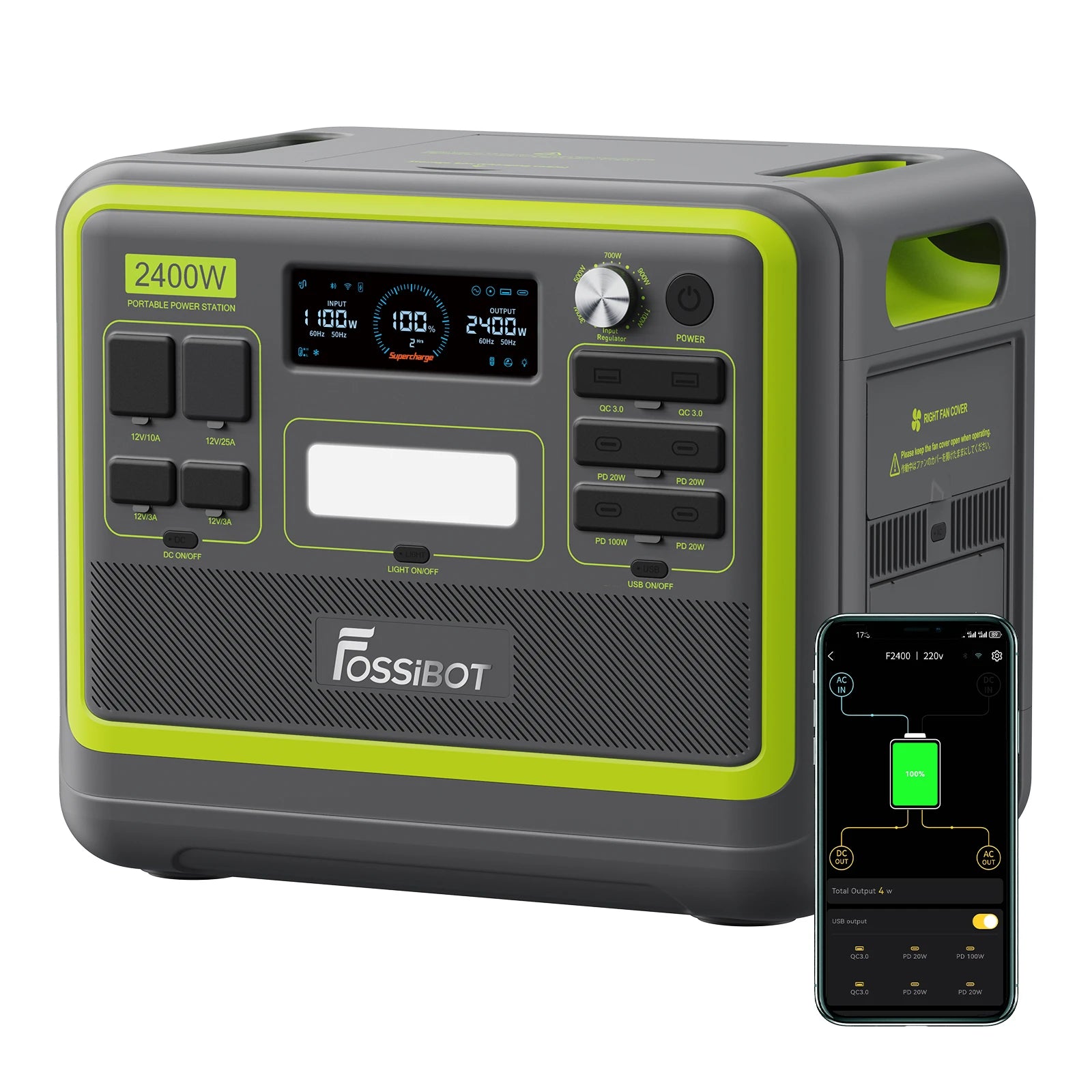
A Quick Real-Life Example – FOSSiBOT F2400
Let’s make this concrete. The FOSSiBOT F2400 is a 2,048Wh portable power station with a 2,400W pure sine wave inverter (4,800W surge). It uses EV-grade LiFePO4 cells rated for 4,000+ cycles – about 10 years of daily use.
Here’s what that means in real life:
- Home backup – runs an energy-efficient fridge for 20–40 hours.
- CPAP machine – lasts 2–3 full nights.
- Lights, router, laptop – days of use.
- RV or cottage – powers a water pump, TV, coffee maker, and portable fridge with ease.
It also has 16 output ports and switches to battery in 8 milliseconds when the grid fails – so your computer never even blinks.
You don't need to remember all the numbers. Just know that a station like this is ready for almost anything a Canadian home or adventure throws at it.
Frequently Asked Questions (FAQ)
Q1: How many years does a LiFePO4 battery really last?
A: 8–15 years with normal use. Many portable power stations are rated for 4,000 cycles – that’s daily use for a decade.
Q2: Can I use it inside my house?
A: Yes. No fumes, no carbon monoxide. Safer than any gas generator.
Q3: Does it work in Canadian winter?
A: It can discharge down to -20°C. For charging below freezing, look for a model with “self-heating” or low-temperature protection.
Q4: Is it really cheaper than lead-acid?
A: Over 10 years, yes. Fewer replacements mean lower total cost.
Q5: What’s the difference between a portable power station and a solar generator?
A: They’re basically the same thing. “Solar generator” usually means a power station that works with solar panels.
Q6: Can it run my fridge during a blackout?
A: Yes. A 2,000Wh station like the F2400 can run an efficient fridge for 20–40 hours.
Conclusion – Make the Switch and Stop Worrying
LiFePO4 batteries aren’t magic. They’re just better technology – longer lasting, safer, and cheaper over time.
When you buy a portable power station with LiFePO4, you get a complete, ready-to-use backup for your home, cottage, or RV. No noise. No fumes. No maintenance.
Whether you’re worried about the next winter blackout, planning a summer road trip, or just tired of replacing dead batteries every few years – LiFePO4 is the smart choice.

Ready to leave gas generators and short-lived batteries behind?
Shop the FOSSiBOT F2400 LiFePO4 Portable Power Station →
Or drop a comment below – what’s your biggest power headache? Home backup, camping, or cottage life? We’d love to help.


